
Case fileRef. EO-2011-06Classification: public, with client details withheld
Ezekiel Ologunde
- Matter under investigation
- How a systems kid from Ilorin went from keeping computers up to securing AI-era systems
- Occupation
- Security consultant, cybersecurity instructor, doctoral researcher in AI security
- File opened
- June 2011, Ilorin, Nigeria
- Last known location
- Birmingham, Alabama. Remote available.
- Case status
- Open to work
- Wanted for
- Security engineering, AI security and governance, GRC, detection and cybersecurity education roles
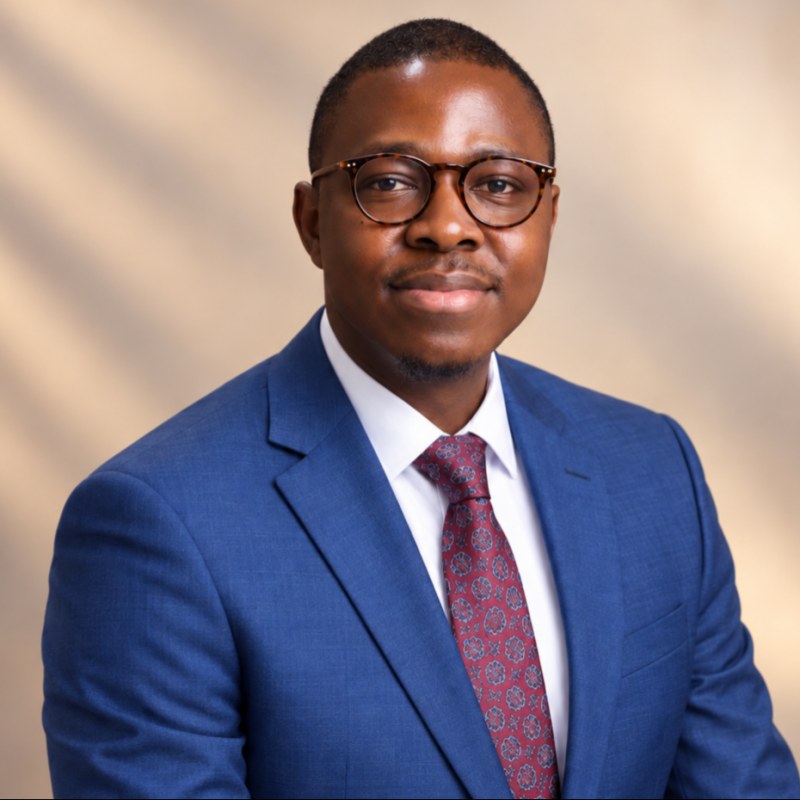
Exhibit ASubject photograph
Statement of the subject, in plain English
I protect computer systems, and more and more the AI tools that organizations are plugging into them. In fifteen years I went from fixing strangers’ computers in an internet cafe in Ilorin, Nigeria, to a master’s in cyber forensics, doctoral research on AI security at George Washington University (D.Eng., expected September 2027), my own security consultancy, Cyntraix, and teaching security at three institutions.
What I am looking for: a role in security engineering, AI security and governance, GRC (governance, risk and compliance), detection, or cybersecurity teaching. Birmingham, Alabama, or remote.
Key findings
What I can do for you
Six findings, each with the real numbers and the exhibit that backs it.
In plain English: I find and fix security weaknesses, I check my advice on my own equipment before giving it, I make sure AI tools cannot act on their own, and I teach others to do the same.
-
F-01
I test security tools myself before I recommend them.
I run a small security monitoring lab at home that collects about 304,700 events a day from five sources, and about 3,700 alerts a week. It once caught a broken program that had restarted more than 12,000 times and filled about 361 GB of disk.
Supported byExhibit B
-
F-02
I only report what I can prove.
That is what a forensics degree trains you to do. In my doctoral project, a scan of a simulated network of 26 declared devices (cameras, routers, smart speakers and cloud services) found 19 of them and reported zero devices that were not really there, and it names the 7 it could not reach instead of hiding them.
Supported byExhibit CM.S. Cyber Forensics
-
F-03
I keep AI useful without letting it decide on its own.
In my research and my own systems, an AI model may suggest and rank, but nothing counts until there is measured evidence, and nothing changes until code checks it and I approve it. I also protect AI models from being poisoned or leaking data.
Supported byExhibit D
-
F-04
I build software with security planned in from day one.
Six builds, from a food marketplace to a savings app, each with its security design written down before the code: who can see which data, checks on the server, signed payment messages and encrypted backups.
Supported byExhibit E
-
F-05
I can teach it, from high school to university.
Classrooms at Syracuse City School District, Lawson State, the University of Arizona Global Campus and Adrian College, plus 21 free C++ lessons and a free resource hub for people new to security.
Supported byTraining dataC++ modulesResource hub
-
F-06
I explain security in writing, in public.
Twenty-four research papers posted online (not peer reviewed) and a run of essays on breaches, compliance gaps and AI risk.
Supported byExhibit F
Limits of this report. The lab is two small machines at home, not an enterprise. Breakwater is a simulated network. Both are labeled that way wherever they appear, and neither is presented as client work.
The file
Five more scenes
Each scene is its own page. Read them in order, or jump.
In plain English: the rest of this site is the proof, one topic per page.
- 02The routeMy career drawn like a hacker’s map, 2011 to now. Scroll and it draws itself, one job or degree at a time.
- 03Evidence roomThe home lab and its numbers, the doctoral project, the software I built and what I have written.
- 04The AI threadHow I use AI, how I defend it, and a clickable map of what can go wrong when an AI model is allowed near real systems.
- 05Model cardMe, documented the way AI models are: what I am for, what I am not for, and a glossary of the terms on this site.
- 06Report toEmail, profiles and a message form that opens your own mail app.